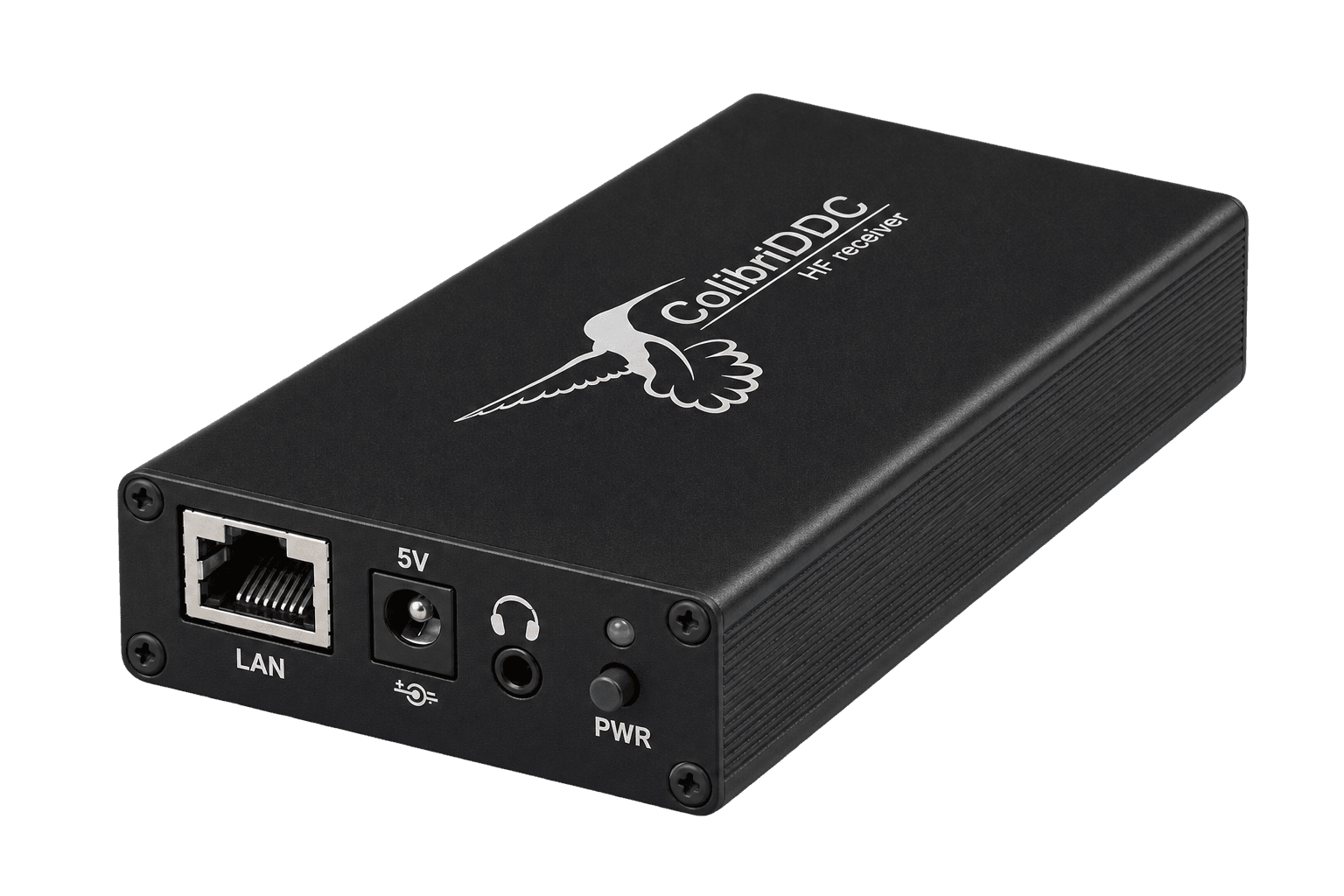
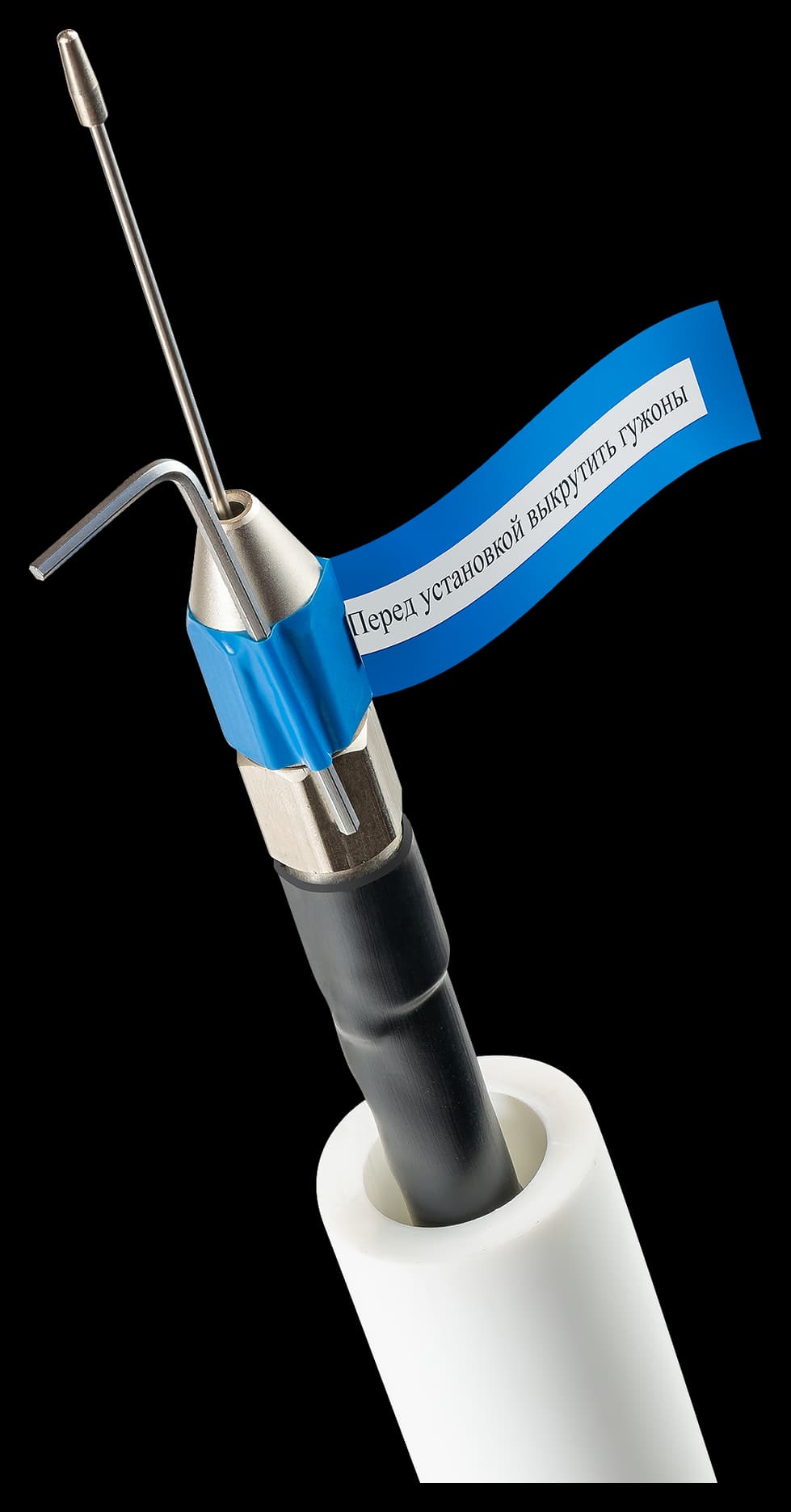
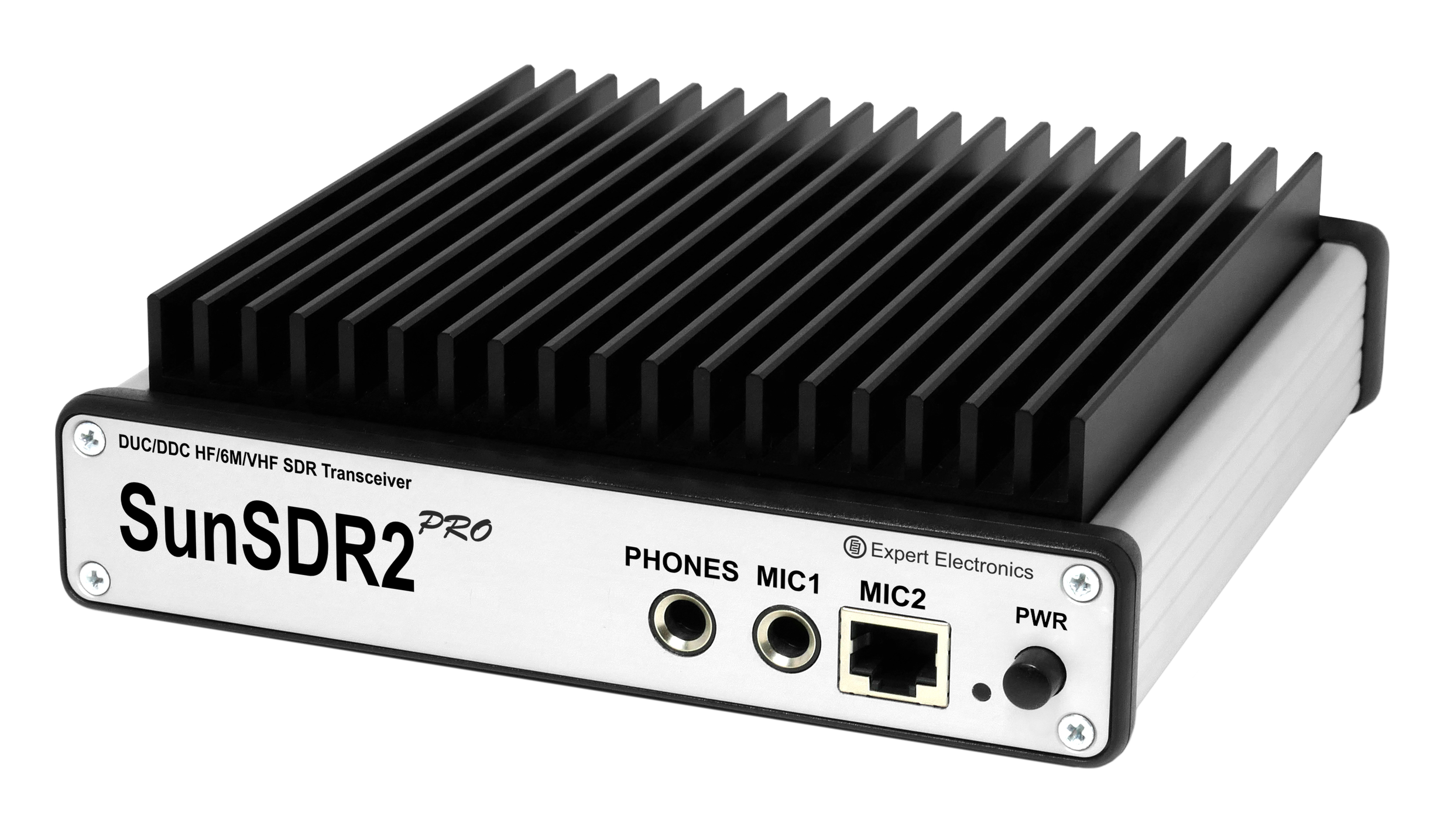
SunSDR2PRO PA50WV amplifier
Трансивер с УКВ-усилителем.
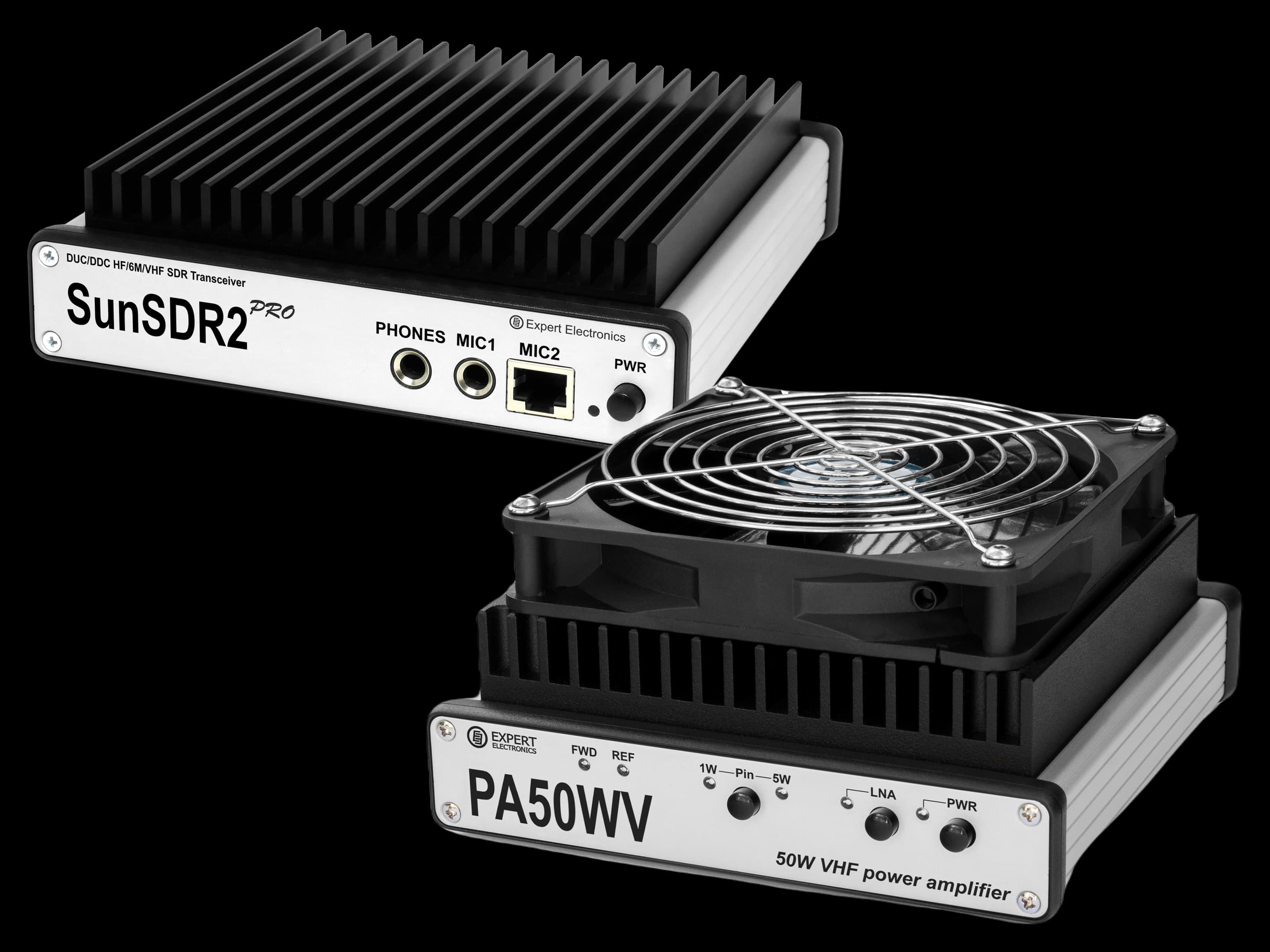
01 / 03 — Bundle — complete set
СанСДР2ПРО и усилитель ПА50ВВ. Основные параметры ниже относятся к трансиверу; состав комплекта указан отдельно.
- HF
- 15W
- ADC
- 16bit
- In bundle
- 2pcs
- 6 m
- 15W
$2,144$2,358
Features
Contests and SO2R
Two independent software receivers, each with a sub-receiver: two HF bands at once and split in DX mode. With ExtCtrl the compact unit becomes a complete contest position.
Home shack and field
130 dB dynamic range on HF and 114 dB on VHF, 0.2 µV sensitivity and a +10 dB preamp keep you confident on a crowded band.
Field power
10–16 V on receive and 12–16 V on transmit: a switching supply or a battery will do.
2 m VHF and transverters
A built-in +22 dB VHF LNA and transverter support. With an external amplifier the PRO runs the whole set-up, and the kit stays portable.
Use Cases
- 01
Contesting
Two independent receivers allow SO2R operation and hunting multipliers on the second VFO.
- 02
DX Hunting
Wide panorama and instant split frequency jump give an edge in dense pileups.
- 03
Remote Operation
Streaming audio and IQ over the network enables full remote operation worldwide.
- 04
Digital Modes (FT8/FT4)
Direct integration with WSJT-X and loggers via TCI protocol with no virtual cables.
ExpertSDR3, TCI and ERS
Free ExpertSDR3 with free updates. The open TCI protocol connects loggers, skimmers and digital-mode programs without virtual COM ports or audio cables; programs without TCI use the RadioSync bridge (CAT, OmniRig). Expert Remote System (ERS) is included: control from a browser or ExpertSDR3, directly or through the ExpertCloud service.
About the software- ExpertSDR3Free software for operating on the air
- TCIAn open protocol for loggers, skimmers and digital modes
- ERSRemote operation from a browser or ExpertSDR3
Hardware headroom
ALC*
Input for external power amplifiers, controlled over ExtCtrl.
Full Duplex*
Full-duplex operation.
* The hardware supports these functions; software support comes in ExpertSDR3 updates.
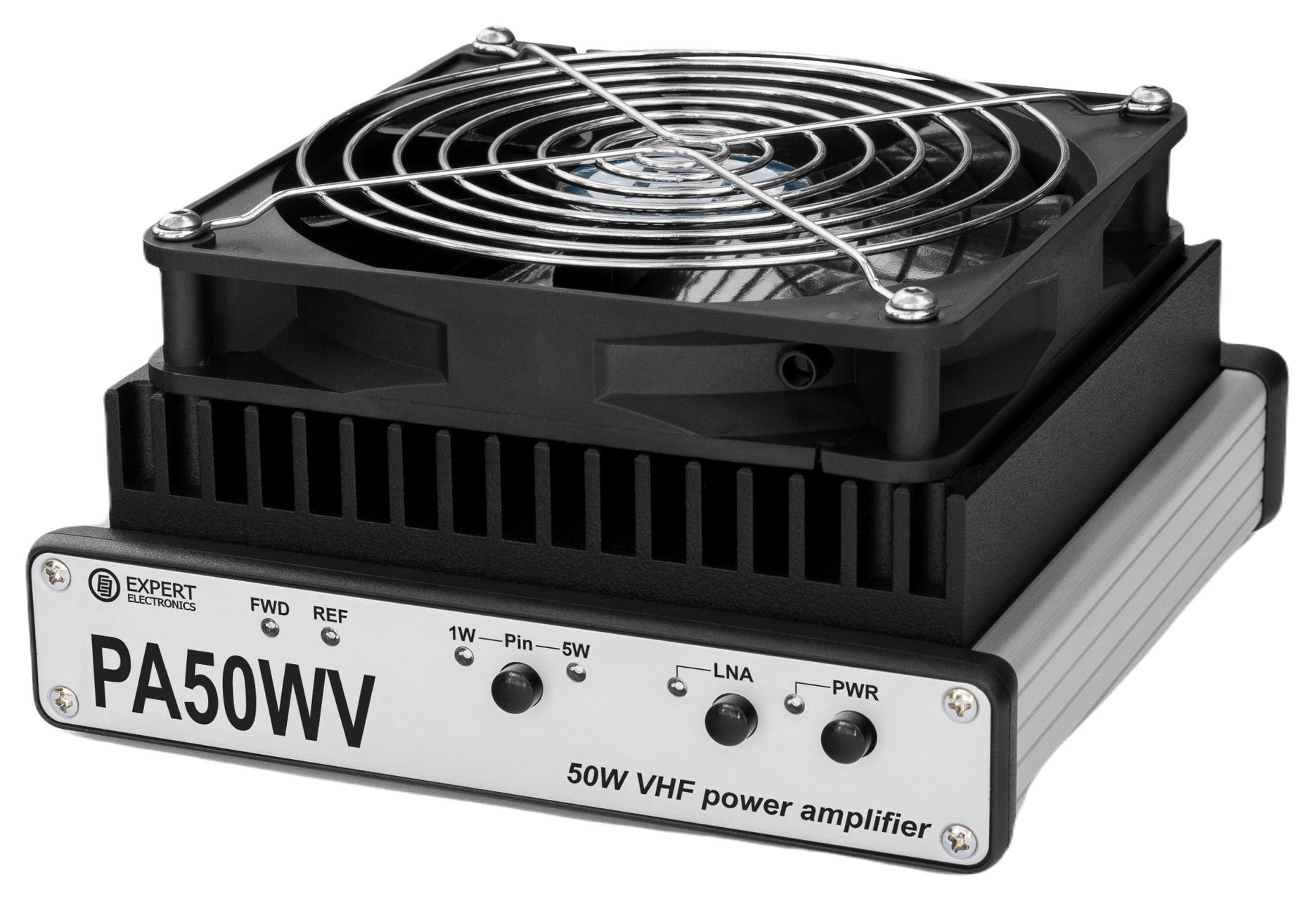
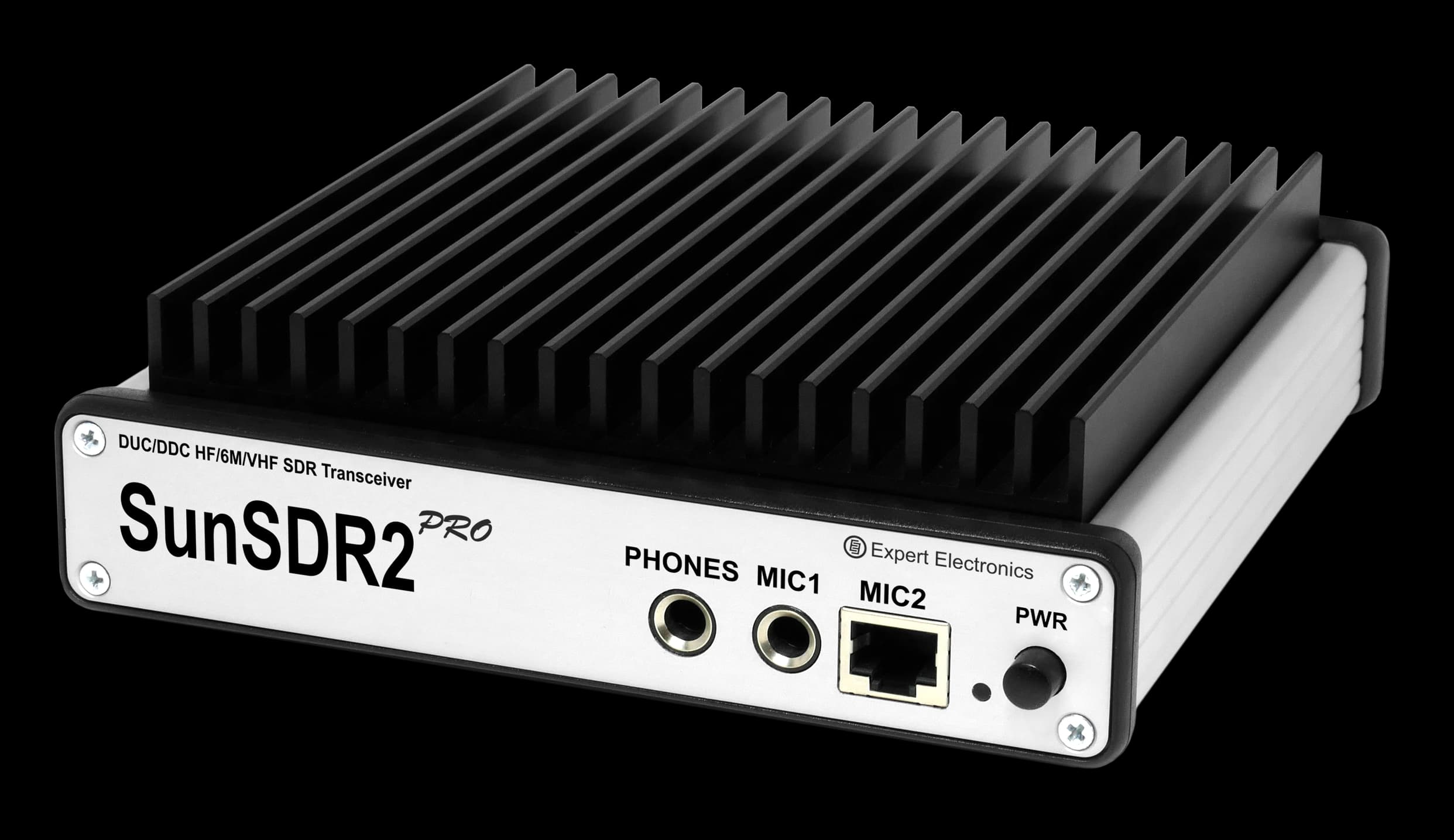
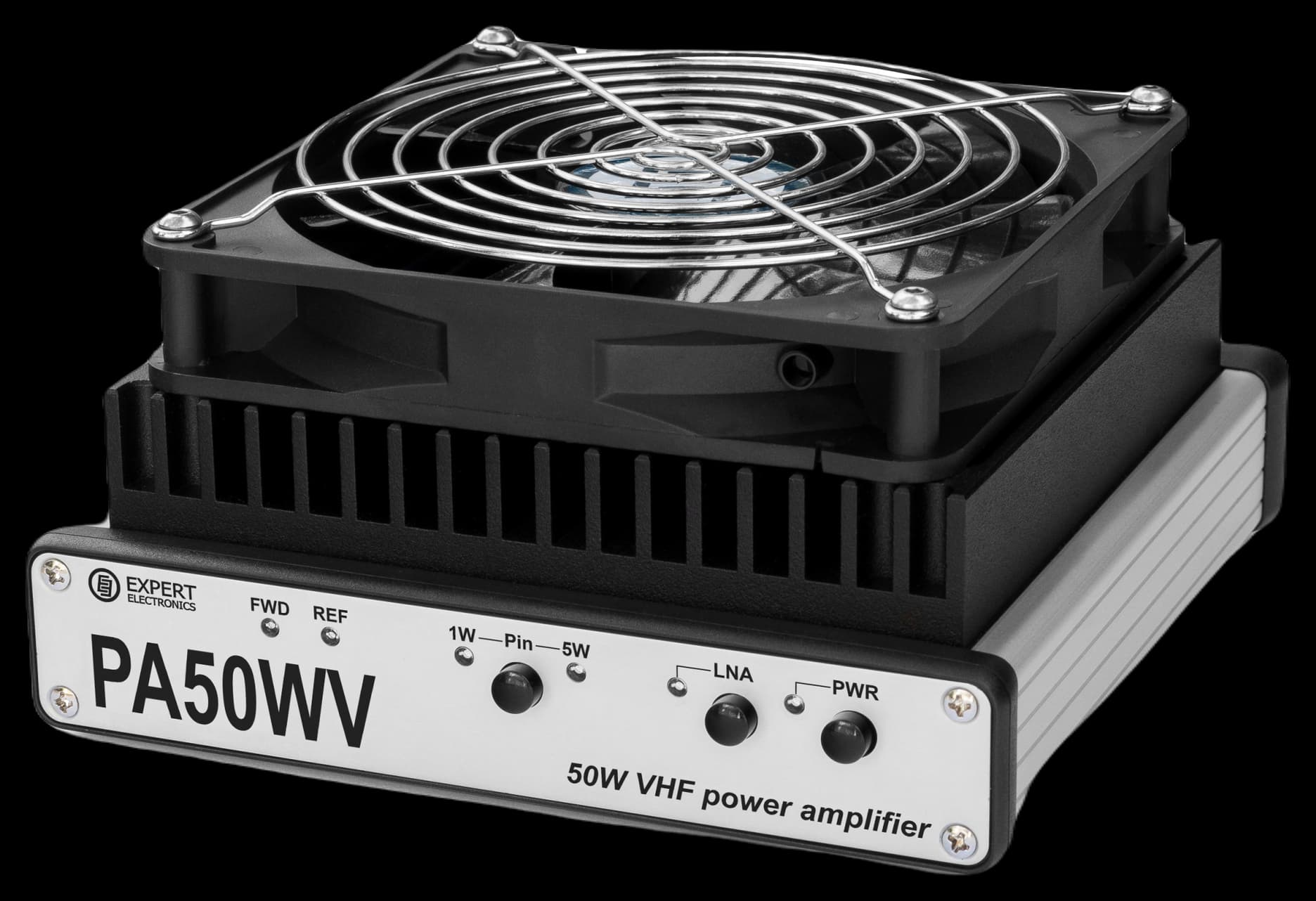
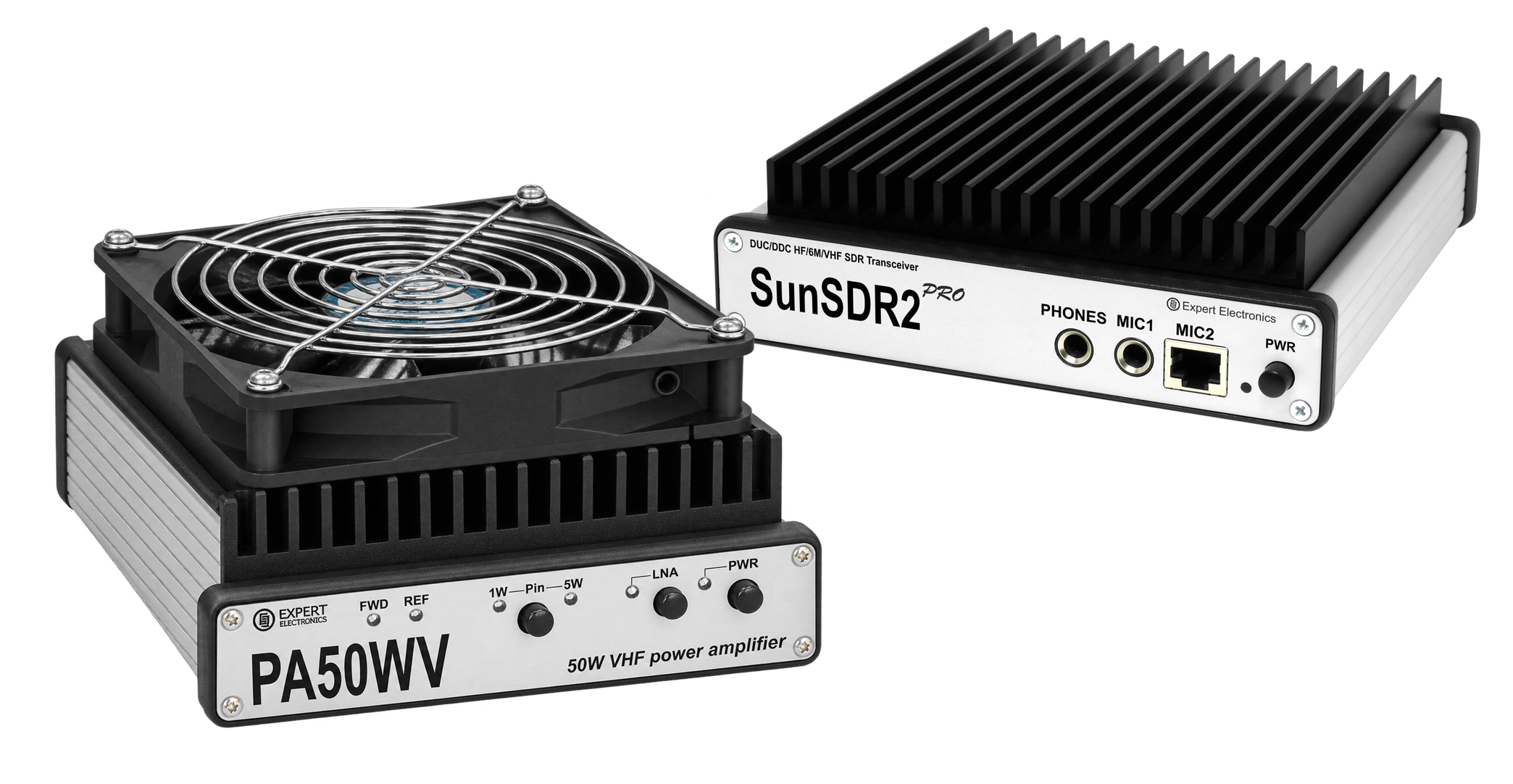
This kit includes a SunSDR2PRO transceiver and a PA50WV VHF power amplifier. The amplifier extends the transceiver’s capabilities on the 2 m band by increasing transmit output power to 50 W. A built-in low-noise amplifier in the PA50WV is available for weak-signal reception. The kit is intended for operators who want to complement their HF/VHF transceiver with a more powerful transmit chain on the 2 m band.
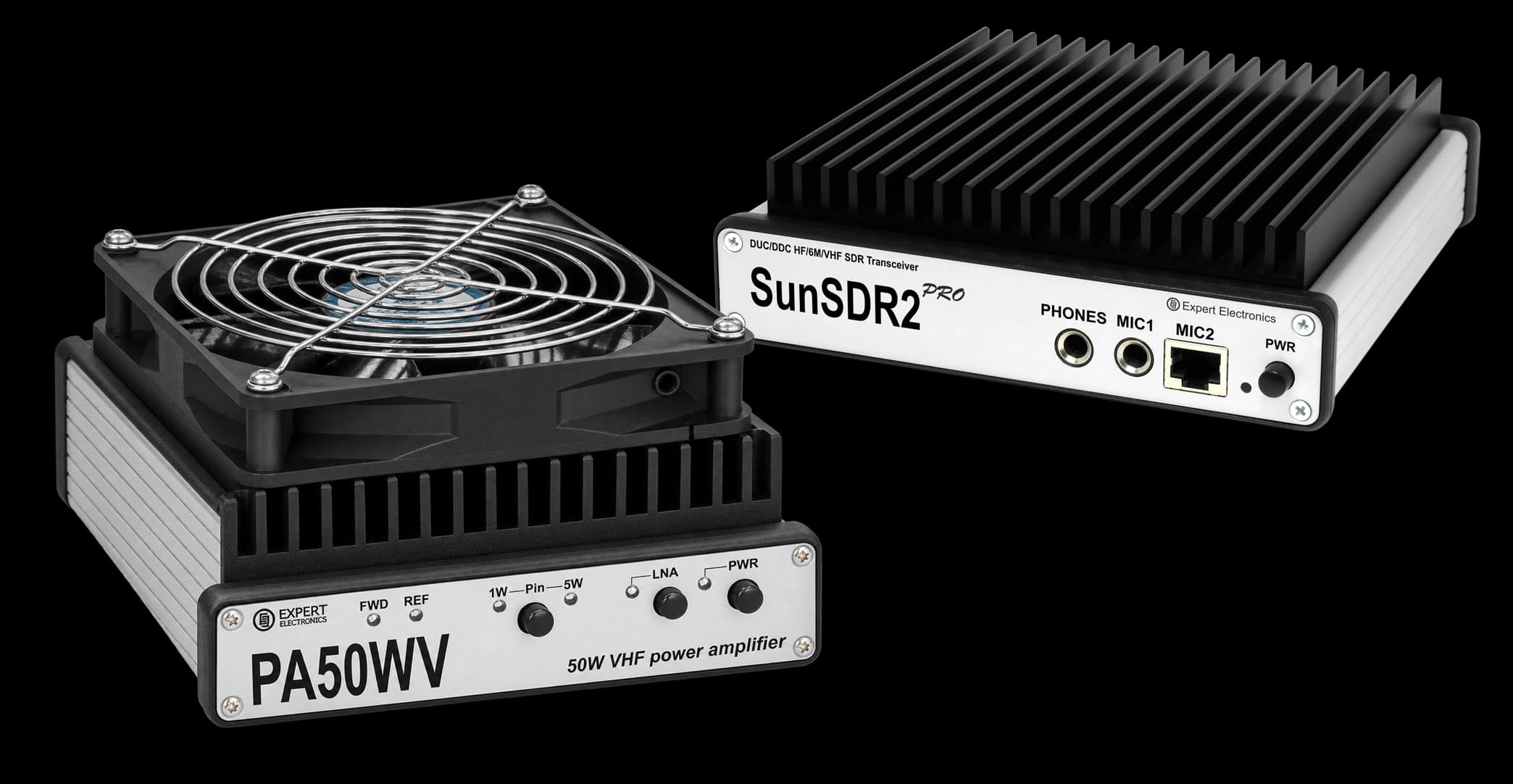
PA50WV
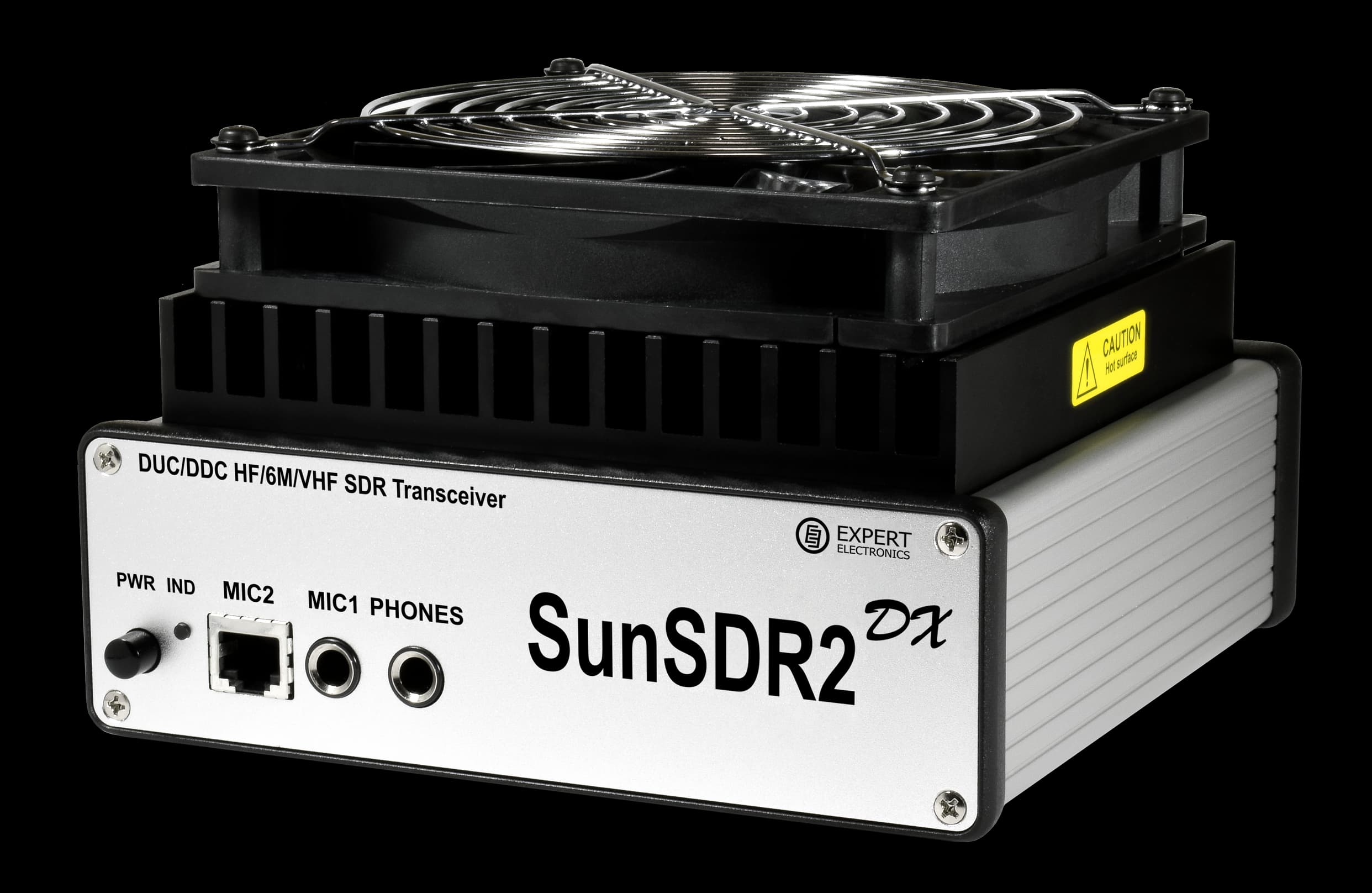
The PA50WV 50 W VHF power amplifier (hereinafter referred to as the Amplifier) for the 2 m band is designed for linear amplification of high-frequency signals. Externally, it uses the SunSDR2PRO transceiver enclosure and a heatsink and fan from the SunSDR2DX.
This amplifier will be of interest to operators making long-distance contacts on the 2 m amateur band. One possible application is installation in a vehicle together with a SunSDR2PRO transceiver.
A Mitsubishi RA60H1317M amplifier module is used to deliver 50 W of VHF output power. Active broadband components eliminate the need for adjustment or tuning throughout the operating frequency range. Active cooling allows continuous-carrier operation for extended periods at full output power. The amplifier uses a conventional single-ended circuit and supports all modulation modes.
Features
50 W
PA50WV provides clean signal amplification up to 50 W over the 136–174 MHz range.
The amplifier can operate continuously for extended periods, including in digital modes.
Two input levels
The input-power setting can be switched between 1 W and 5 W.
Compact size
The amplifier measures 185 × 165 × 83 mm including the cooling module and weighs 1.7 kg, making it suitable for DXpeditions.
Built-in LNA
To improve reception, the amplifier uses a low-noise amplifier with a gain of +19.5 dB. It is enabled by the “LNA” button on the front panel and operates only on receive: power to the LNA is removed automatically when switching to transmit.
What the LNA delivers in practice
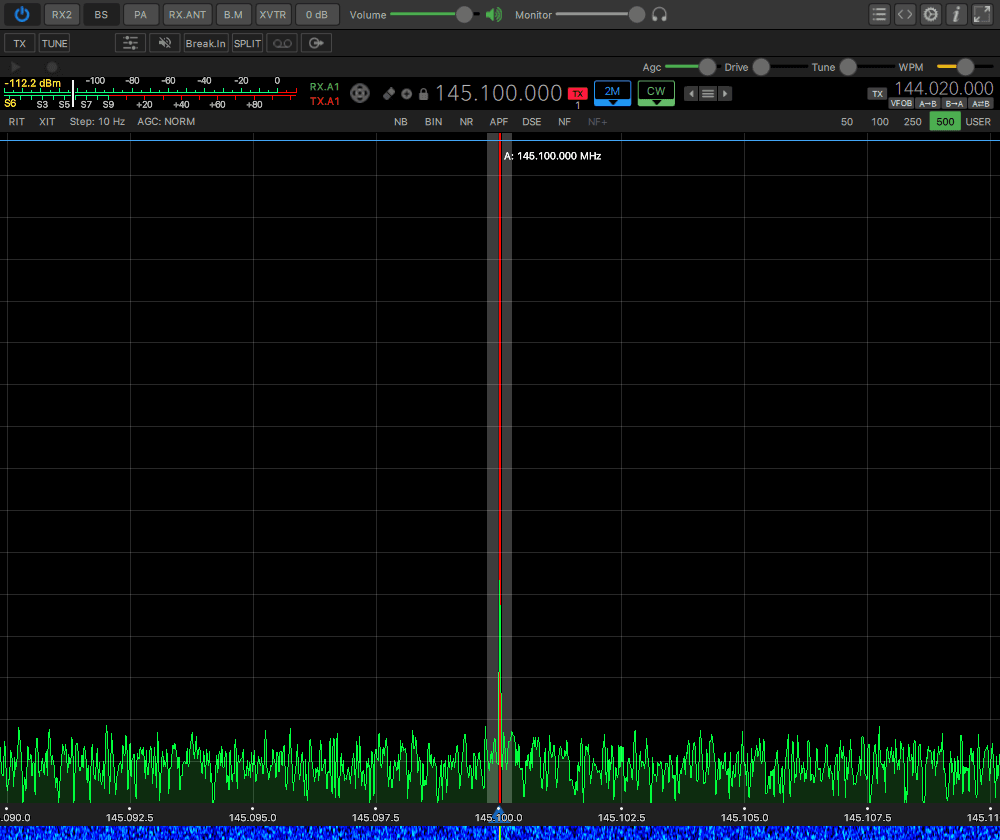
The measurement was made with a SunSDR2PRO transceiver at 145.1 MHz in CW, with a 500 Hz receiver bandwidth and an input signal level of −110 dBm.
The signal increased by 18.3 dB, while the receiver noise increased by only 2.1 dB. The signal-to-noise ratio improved by 16.2 dB: a station that was barely intelligible can now be received clearly.
LNA off: signal −112.2 dBm, noise −122.4 dBm
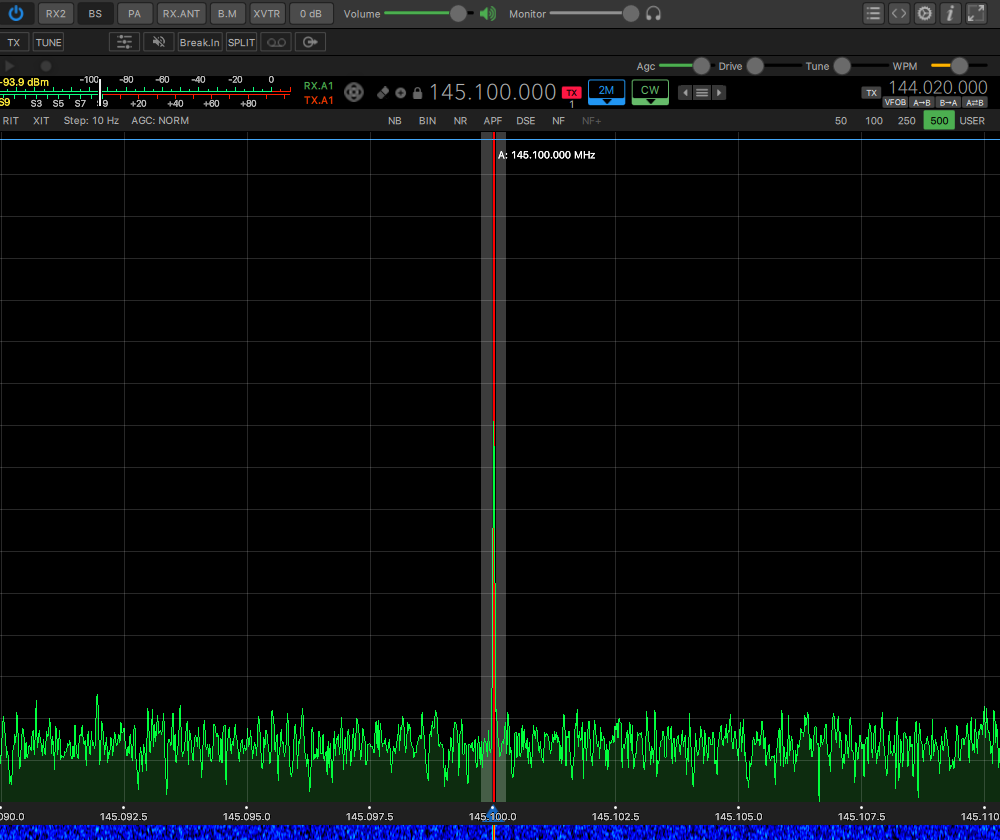
LNA on: signal −93.9 dBm, noise −120.3 dBm
The improvement depends on the antenna, feed line and noise conditions at the operating location: the lower the receiver's own noise, the less an external preamplifier will contribute. These figures are the result of a specific measurement, not a guaranteed specification.
Transmit control
The amplifier switches to transmit in response to an external control signal from the transceiver through the “TX” connector. PA50WV has no RF detector: an input signal alone does not switch it to transmit, so the transceiver must provide a PTT control output.
Output power and drive
The “Pin” button selects an input level of 1 W or 5 W; nominal output power is the same in both settings: 50 W. The amplifier is linear, so output power follows input power: in the 5 W setting, an input of 2.5 W produces approximately half the output power. There is no separate power control on the enclosure and ALC is not used; power is set in the transceiver.
Important. Set the drive-power limit in the “Power correction” menu of the transceiver control software. This sets the maximum output level in the firmware and strictly limits spikes that could damage the amplifier. Never apply an input level above the selected setting.
Enclosure indicators
“FWD” — the amplifier is transmitting
“REF” — reflected power; lights when SWR exceeds 3:1
“LNA” — the low-noise amplifier is enabled
“PWR” — power
The REF indicator is a warning for the operator, not automatic protection: the amplifier does not switch off by itself, so the operator must respond to the indication.
SpecificationsSunSDR2PRO PA50WV amplifier
Receiver Characteristics
| RF ADC, resolution | 16 bit |
|---|---|
| RF ADC, sampling rate | 160 MHz |
| ADC type | LTC2209 |
| RX Frequency range | 0.1...65; 95...155 MHz |
| Sub-receivers | 2 pcs |
| Sample rate | 39; 78; 156; 312 @ 24 kHz |
See all specifications for details
Transmitter Characteristics
| RF DAC, resolution | 14 bit |
|---|---|
| RF DAC, sampling rate | 640 MHz |
| TX Frequency range | 160-6; 2 M |
| Output power on HF | 15 (up to 20) W |
| Output power on 6M | 15 W |
| Output power on VHF | 7 (up to 8) W |
See all specifications for details
Specifications
| Local oscillator TCXO, accuracy | 20 +/- 0.5 ppm |
|---|---|
| External 10 MHz oscillator input | Yes |
| Built-in audio codec / Dynamic Range | 24 bit/dB |
| RF input/output | 2 HF, 1 VHF, ADC IN, DAC OUT |
| PC interface | LAN 100 Mbps Mbit |
| DC voltage range in RX/TX | 10...16 / 12...16 V |
See all specifications for details